
Posts
Roots Journey to Bialystok & Lomza: 21-24.07.2023
2024-08-04
Authors: Gadi and Dvora Eshel, Nofit, Av 5783.
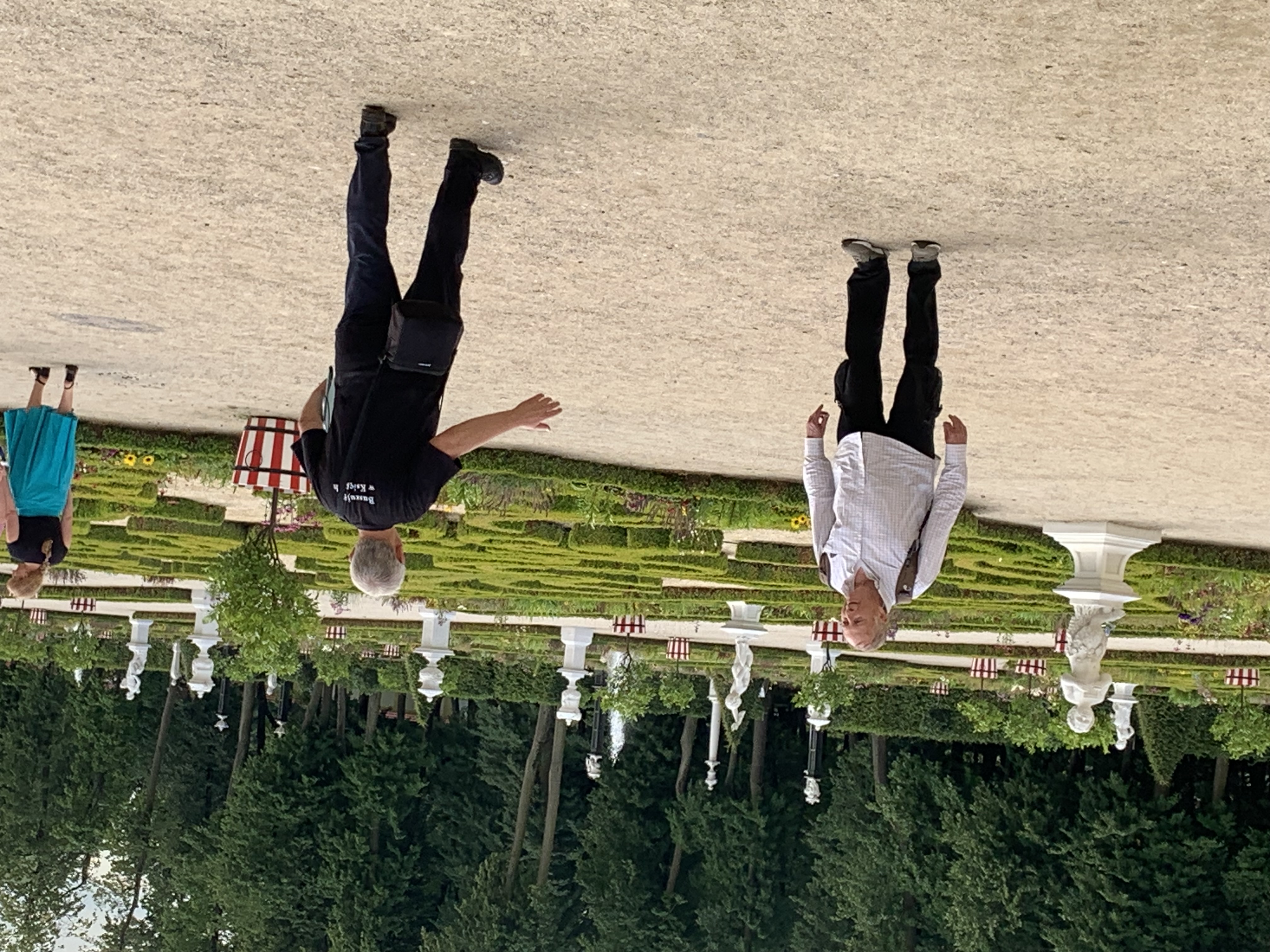

We, Dvora and Gadi Eshel, organized a roots trip to Poland - Bialystok
and Lomza, on 21-24.07.2023. This trip continued a Jewish community and Holocaust trip to Poland -
of "Masaot", under the guidance of Itzik Khiderski, which ended on Friday - 21.07.2023 in Krakow. On
our journey, we spent two days in Jewish Bialystok, and continued to a full day Lomza. The purpose
of the journey was to discover the roots and history of our families: Dvora’s in Lomza, and of
Gadi’s in Bialystok, and to get an idea about their lifestyle in the community they were part of,
their whatabouts, and if possible, to save something about their fate in the Holocaust.
Gadi's family has roots in Bialystok: father was born there. He and his
brother – Binyamin – made Aliyah to Israel before the war, and thus were saved of it. His father,
mother and 4 brothers and sisters, who stayed there - perished in the Holocaust. Dvora's family has
roots in Lomza: her maternal grandmother and her great grandmother, whose roots are in the Sheinkop
and Shimonowitz families, made Aliyah to Eretz-Yissra’el in 1927, before the Holocaust.
For the roots journey we hired a local Polish guide - Daniel
Paczkowski. Daniel is a genealogist and owner of a company for guiding roots and history tours in
Bialystok. Polish Catholic; philo-Semite, and connected to organizations that are engaged in the
preservation of the history of the Jews there, and the Jewish Bialystok Museum. This museum was
recently opened by the Polish researcher Dr. Tomasz (Tomek) Wisniewski. He has been establishing it,
and intensively builds it and collects exhibits for it. The training and discussion were conducted
in English, and Polish inscriptions were translated on the spot.
Before the trip, we prepared a list of places, sites, and mentions of records that we were
interested in, and Daniel researched and tried to dig out relevant information. In Polish of course.
Replica Watches
This included hard-to-get-in archives of municipalities and churches, while we tried hard
to study the whatabouts therein; remotely, as deep as possible... On the journey, we passed all the
places we had intended to visit; both in Bialystok and in Lomza. These included community sites and
family roots sites. During the tour we have been hearing reviews of the sites and their histories -
Polish and Jewish ones - combined, starting with the founding of the cities and the Jewish
communities therein - Lomza 1000 years ago and Bialystok 600 years ago, and what is known about
their extermination in the Holocaust.
As for the root sites -
those that are personally connected to our family, the success in
discovering them was partial.
In Bialystok, we located the house where the family had been living in,
at Pierackiego 36, and its history for the last ~150 years! The house remains standing and finely
functions today, because it was outside the Jewish quarter, and therefore was not destroyed by the
Nazis. The history of the house, the family ties of the entrepreneur who had built it - David
Halpern, with his/our family ties - Livshitz, in future generations, also became clearer. In the
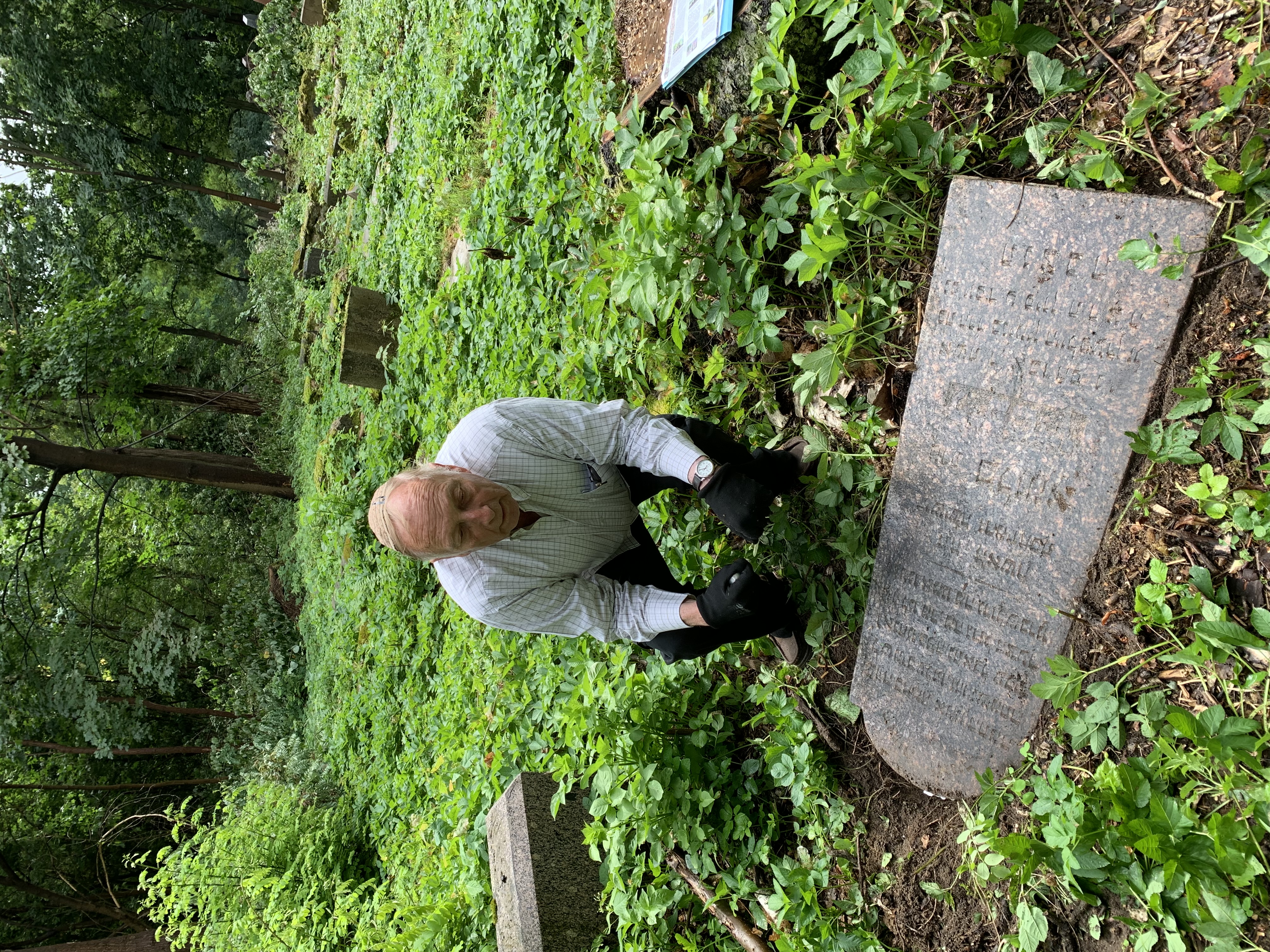
active cemetery - 'Bagnowka', we located the grave of Gadi's great-grandmother - Bluma
Halperin-Livshitz. However, we were unable to identify other graves, which are hidden in a forest
thicket. We also located the Polish army building, where my father - Yehuda, served, for a few
months, and the building used by the local soccer team, which he took part in. On the other hand,
the institutions where they had been studying, working, praying and living at large, were totally
destroyed in the Holocaust, and only commemorative plaques and monuments remain to signify the
glorious past.
In Lomza, we didn't have
the addresses of the houses the Sheinkop’s and Shimonowich’s extended families lived in, but we had
pictures of the gravestones of the great-grandfather on both sides and of Dvora's
great-great-grandmother, from both sides. Despite intensive searches, we could not find these
gravestones, but we located in the “New” cemetery (since 1891) tombstones and graves of other family
members: Yissra’el-Yakob Sheinkop - brother of Dvora’s great-grandmother and Shlomo-Aharon Sheinkop,
brother of great-grandfather - Ari Zvi Yehuda Sheinkop. None is left of the pioneering Hebrew
Kindergarten of the “Hatek’hiya” (Revival) association - 'Shalom Aleichem', where Dvora's
grandmother was a teacher in, and only a commemorative plaque can be related to the magnificent
Yeshiva and Great Synagogue. Replik Rolex Uhren
Community sites in
Bialystok refer to sites featuring the city's history, including the occupations and the annexations
it had undergone in its 600 years of existence, such as Barnicki Palace, the Jewish neighbourhood
and the ghetto, and the magnificent institutions that had operated before the Holocaust. It is also
features in the recently opened Jewish Bialystok Museum.
•
Synagogues: The Great Synagogue and the Massacre Memorial, Citron Synagogue, Piascover
Synagogue, Shmuel Mohliver Synagogue. The 'Bagnovka' cemetery is also a
heritage site and the inscriptions on the tombstones tell the story of the community and the
family.
• Cultural and educational institutional included the
Gutman Gymnasium, ‘Tarbut’ School, Puppet Theatre and the Esperanto Center and memorials.
• Holocaust sites included the “firing pits” and the mass graves in the
Pietrasze forest, the
memorial of the Great Synagogue, the
ghetto and its gates, the memorial to Yitzhak Melamed and the Judenrat building, the place of
Deportation to Treblinka, and locations of the ghetto uprising led by Mordechai Tannenbaum, until
all the fighters were killed in the last bunker on Khmielna Street, on 21.08.1943.
Lomza is one-fifth the size of Bialystok, and it does not have similar
large centres and palaces, and it looks like a well-kept suburb. Its community sites included the
New Jewish Cemetery and the earlier cemeteries - scattered in parks above the Narev River, and the
stately community institutions. institutions, a large part of which is today is just coordinate on
the map, and even a modest plaque or some other mark, does not mention their glorious past. The
community institutions in Lomja that we visited included: the “Hatek’hiya” (Revival) Association;
the Hebrew Kindergarten - today the place is not marked as a historical site and no other landmark
mentions it; the Jewish Hospital in Senatorska, the Jewish Orphanage in Senatorska, the site of the
Great Synagogue - today there is no trace of it – whatsoever; the home the Midrash of the Great
Yeshiva of Lomza - which had been totally leveled, and a Polish-Jewish-Hebrew school, that somehow
remained standing.
|
COMMENT () |
| E-MAIL (optional - your email address will not be published) NAME (optional) |